
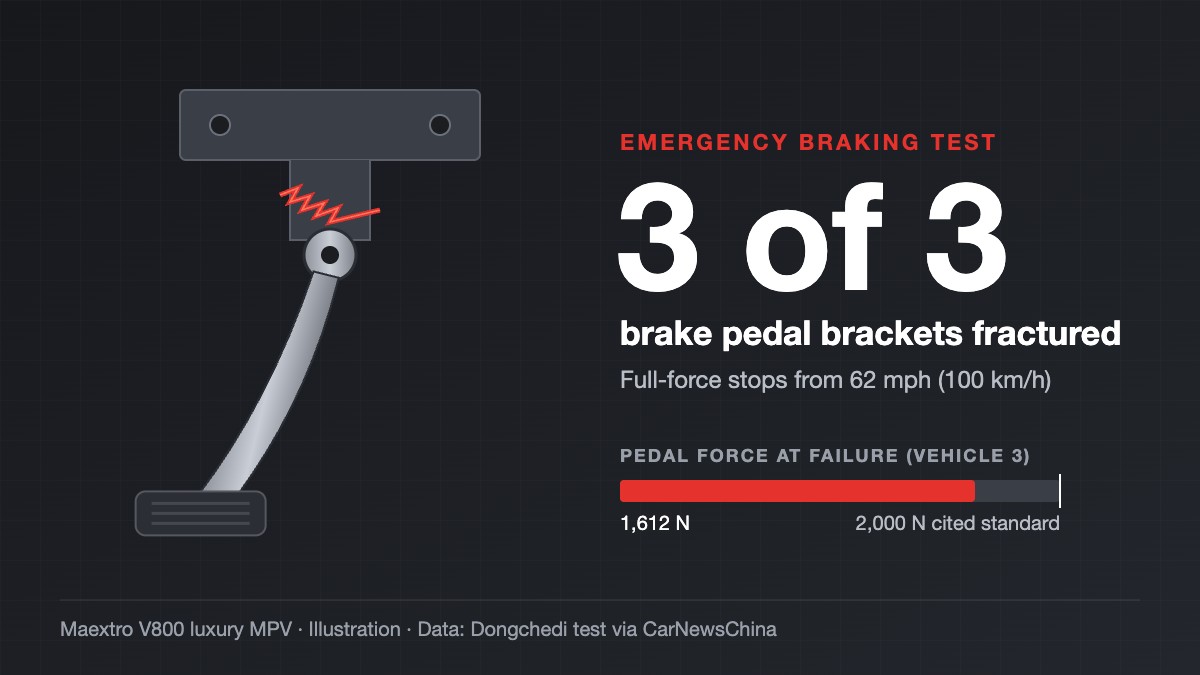
The controversy between Huawei-backed Zunjie and automotive media platform Dongchedi began with a relatively straightforward issue: three Zunjie V800 vehicles reportedly suffered brake pedal bracket failures during emergency braking tests. Instead of remaining a technical debate over testing methods and vehicle safety, the dispute has escalated into a broader battle over credibility, reputation, and who is allowed to criticize Huawei.
But why does such a simple issue have to become an all-out war?
If Dongchedi conducted flawed tests, Huawei should demonstrate precisely how. If the vehicles have a design weakness, the company should acknowledge it and fix it. Either way, the solution should be evidence, independent investigation, and transparency—not an endless struggle to discredit the other side.
The real problem is that Huawei increasingly seems to occupy a position where it is not supposed to be questioned.
Huawei has achieved remarkable technological success, and its contributions deserve recognition. But success does not grant immunity from criticism. Nor should a company’s association with national pride make every criticism of its products an attack on the country itself.
This is where the comparison with the Chinese Communist Party becomes uncomfortable. The two are obviously not the same institution, but they can exhibit a similar logic: when an entity becomes too important to question, criticism is treated as a threat to its authority rather than an opportunity to correct its mistakes.
The most dangerous aspect of such a system is not that it makes mistakes. Every company, government, and institution makes mistakes. The real danger is becoming so unwilling to admit them that correcting the mistake becomes less important than defeating the person who exposed it.


Leave a Reply