
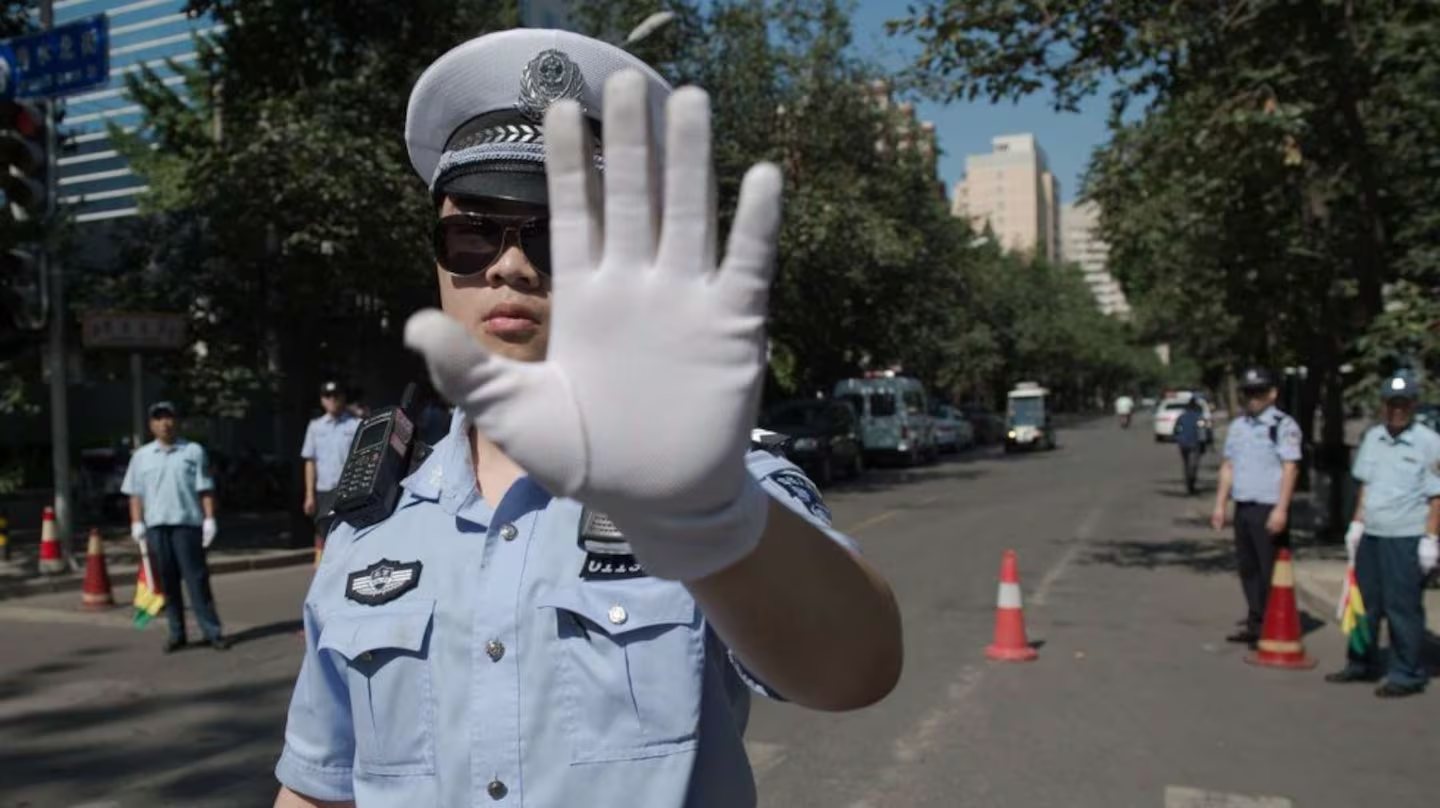
In recent years, Chinese local governments, under financial strain, have adopted controversial enforcement measures, likened to “distant-water fishing.” This practice involves overreaching enforcement for revenue generation, targeting various sectors, including literature. Since June, police in Anhui Province have arrested over 50 danmei writers, primarily young women, accusing them of profiting from distributing obscene materials. The writers face heavy fines and, in some cases, harsh prison sentences, leading to public outrage over the severity of these penalties.
Critics argue this enforcement reflects broader issues of censorship and authoritarian overreach. Former prosecutor Shen Liangqing highlights the abuse of power, where local governments exploit “political correctness” to generate revenue, infringing on freedom of speech and property rights. Similar tactics have been observed in other sectors, such as businesses targeted for non-compliance with arbitrary demands, further fueling concerns about the erosion of rights and the misuse of authority.
The controversy underscores a systemic problem in law enforcement and governance in China, with local authorities resorting to creative revenue-generation schemes amidst economic pressures. Premier Li Qiang recently announced plans to standardize business-related law enforcement, but ongoing incidents reveal a persistent challenge, particularly in safeguarding creative freedom and ensuring fair, legal governance.


Leave a Reply