
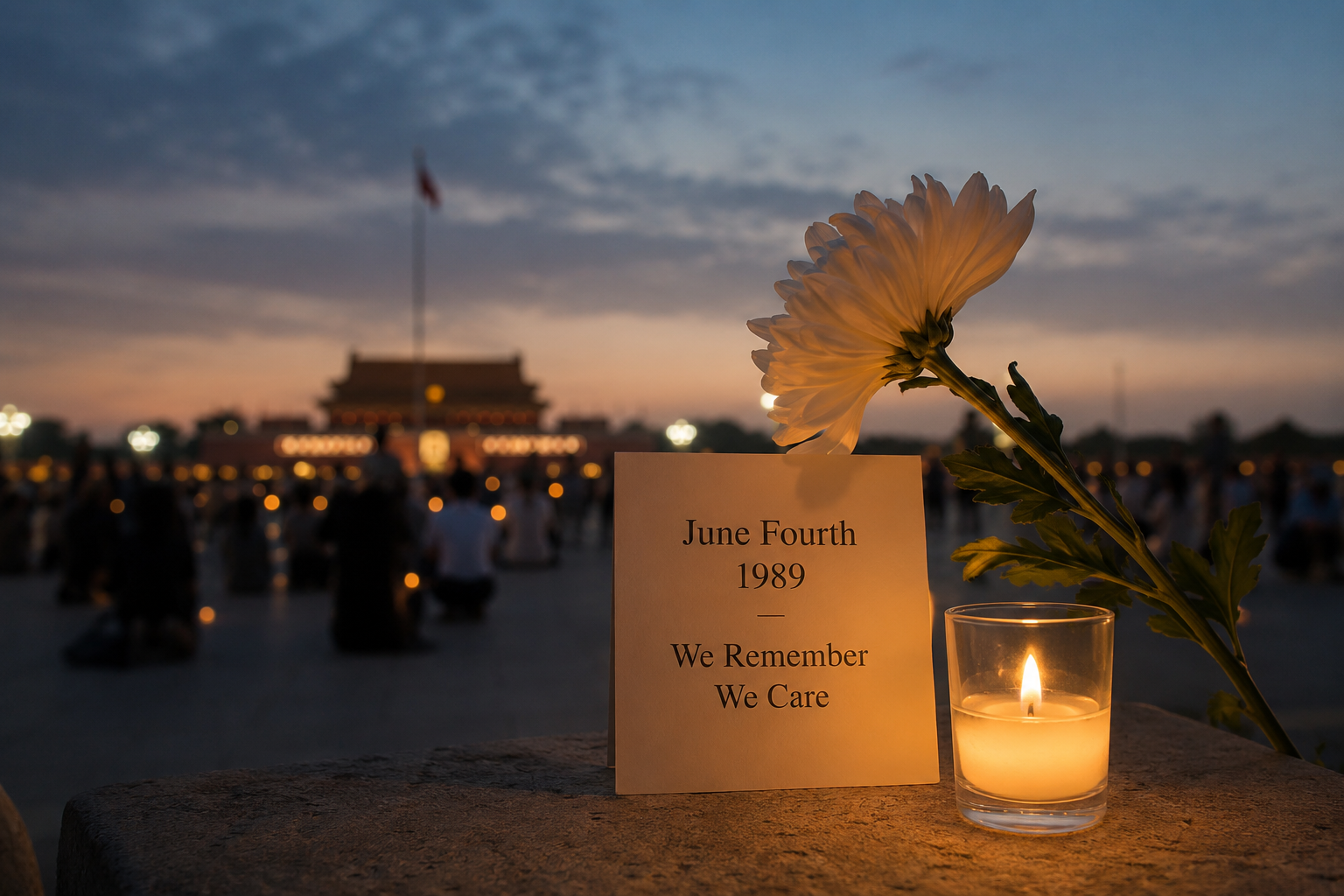
Every year, the first week of June becomes a sensitive period in China. Discussions related to the events of June 4, 1989 are heavily censored, online platforms tighten moderation, and some companies even avoid making major announcements on June 3rd and 4th to reduce political risk.
This stands in stark contrast to the Chinese government’s frequent calls to “never forget history.” History is praised when it serves official narratives, yet when it concerns the government’s own actions, discussion is restricted and remembrance is discouraged.
The contradiction reveals the underlying goal: not historical reflection, but control over public discourse. A government confident in its legitimacy does not need to fear open discussion of the past.
History shows that even the most serious social conflicts can heal over time when they are acknowledged and addressed honestly. Wounds may be painful, but they can eventually close. By contrast, attempts to suppress memory and silence debate do not eliminate problems—they merely push them underground.
The tragedy of June Fourth is not only what happened in 1989. It is also the continuing effort to erase it from public memory. Such a strategy may preserve silence in the short term, but in the long run it risks deepening mistrust and widening social divisions. History cannot be resolved through censorship; it can only be confronted through truth and open discussion.


Leave a Reply