
When the Market Becomes a Political Weapon
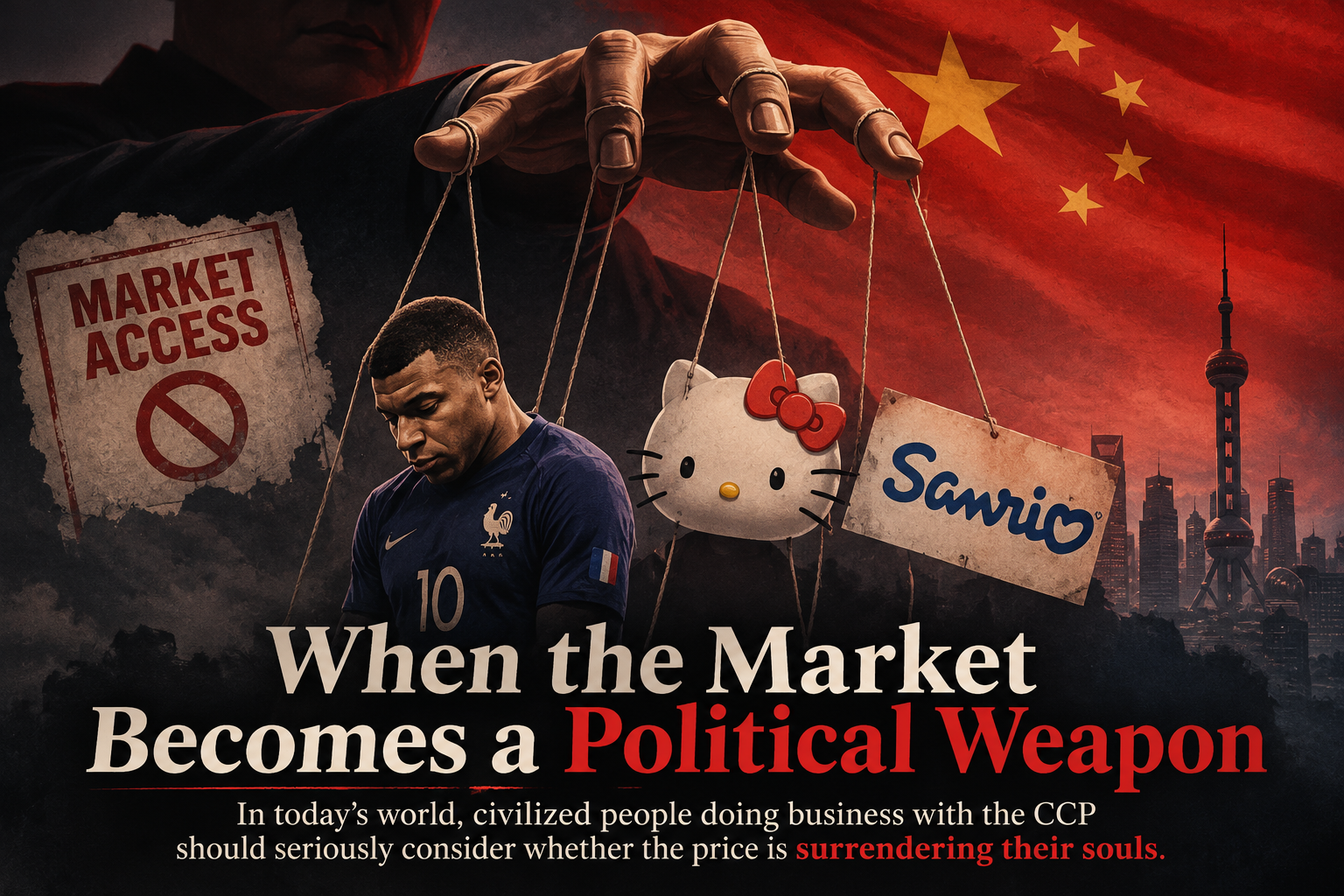
The recent controversies involving Kylian Mbappé and Sanrio reveal something deeply troubling about the way the CCP uses China’s enormous market as a tool of political coercion.
Mbappé made a joke about a meme involving Mao Zedong. The response went far beyond criticism: commercial partnerships were terminated, football broadcasts were suspended, and apologies were demanded. Days later, Sanrio found itself under pressure over a fictional Japanese television series with which it had collaborated. Even Hello Kitty, apparently, was not allowed to remain politically neutral.
What makes these incidents particularly disturbing is the principle behind them: guilt by association, collective punishment, and an ever-expanding definition of political offense. An individual’s words can cost an entire organization its business. A fictional storyline can put an unrelated commercial partnership at risk. There seems to be no clear boundary, because the boundary itself can always be moved.
Using economic leverage to dictate what people can say, what stories companies can tell, or which creative works they are allowed to associate with is not cultural respect. It is political coercion disguised as consumer choice. A market should be a place for voluntary exchange, not an instrument for enforcing ideological conformity.
Ultimately, the question for anyone doing business with the CCP is no longer simply how much money the Chinese market can bring. It is what price they are willing to pay to access it.
In today’s world, civilized people and organizations dealing with the CCP should seriously consider whether the price of doing business is, ultimately, surrendering their souls.

Leave a Reply